
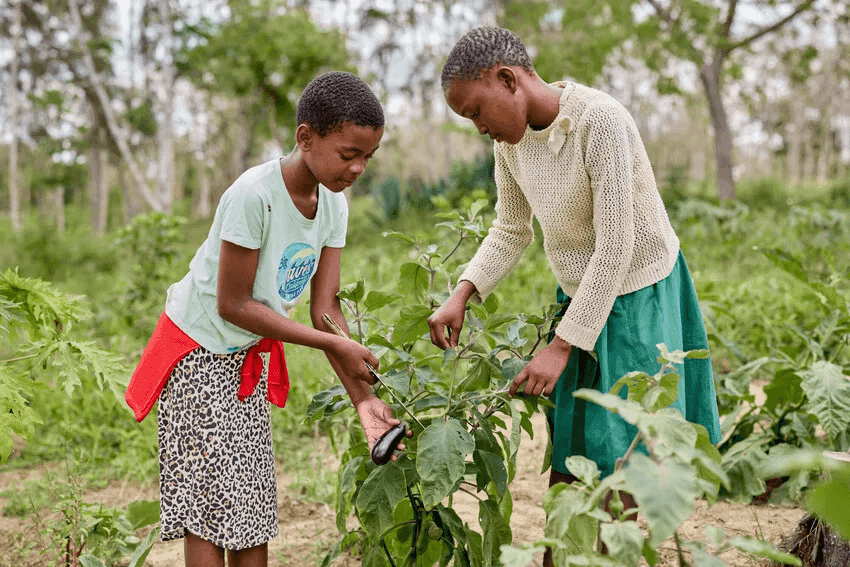
School Gardens
In many parts of Kenya, fresh vegetables are a luxury. Often, all that is available during school breaks is maize porridge – filling, but not particularly rich in vitamins. This is exactly where school gardens come in.
The idea is simple: a garden is planted right next to the school, growing vegetables such as spinach, cabbage, tomatoes or beans. The beds are often watered using water from farm ponds or rooftop rainwater harvesting systems – making clever further use of rainwater.
The school garden is more than just a source of food. The children learn how to care for plants, protect the soil and harvest sustainably. At the same time, the harvested vegetables go straight to the school kitchen. This provides healthier meals and gives the children more energy for lessons.
Sometimes parents and villagers help out too – they bring seedlings, help with weeding, or share tips from their own experience. The project thus connects the school with the whole community.
Many school gardens are financed by German schools that raise money through sponsored runs or charity events. In this way, a donation becomes not just a garden, but also an outdoor classroom where lessons are learned straight from the earth.
With every school garden, it is not only the vegetables that grow – so too does the children's knowledge, health and future prospects.