Sand Dams
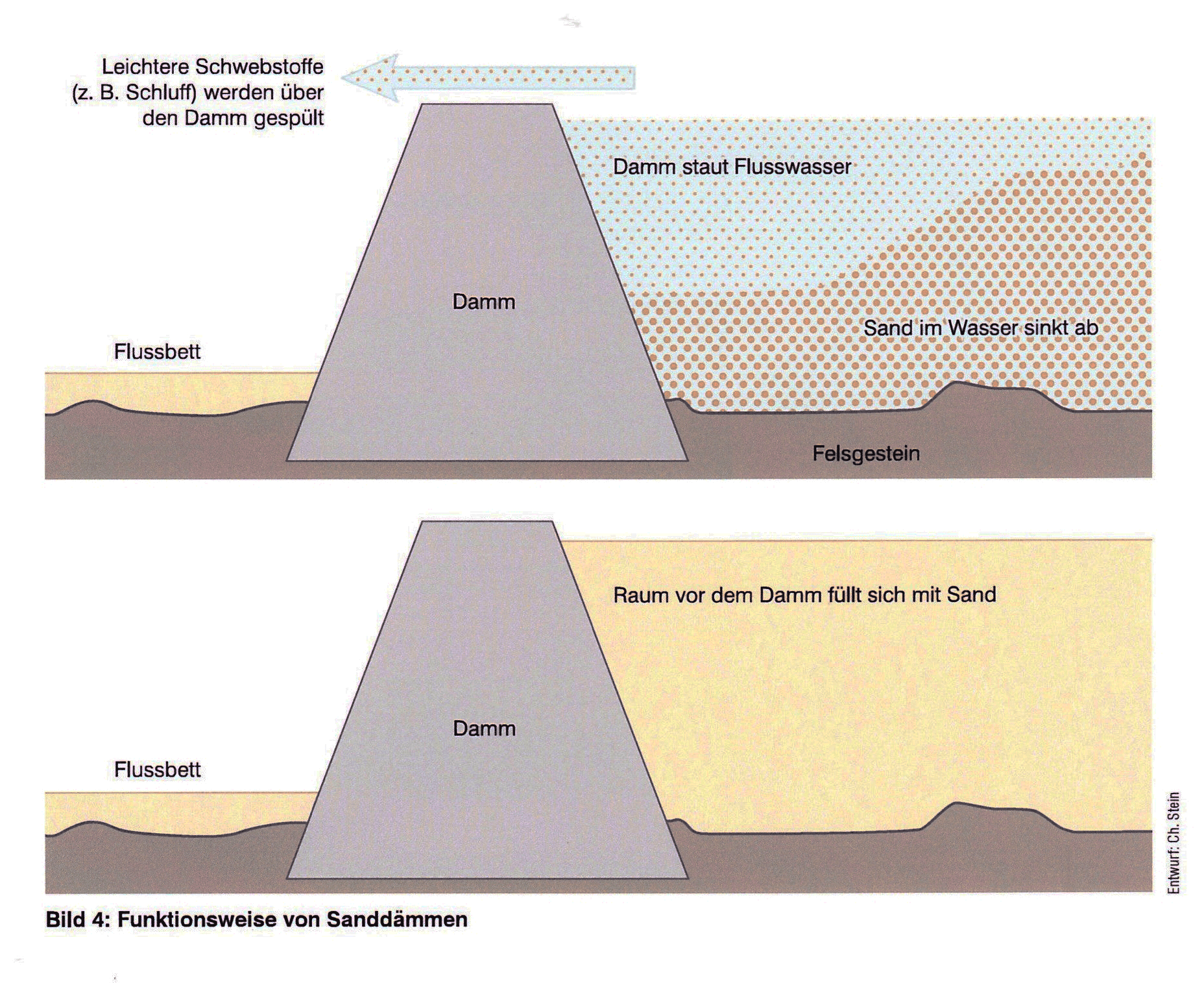
In some parts of Kenya, rivers flow only rarely – usually after heavy rainfall. The otherwise dried-out valley floors then turn into riverbeds flooded by high water. In places like Makueni and Machakos, communities build so-called sand dams: concrete barriers across the riverbed. When a flood carrying sand arrives, the water backs up behind the dam. In the still water the sand settles and stores water in the spaces between its grains. This creates a small, artificial groundwater reservoir in the ground.
Once filled, this underground sand can store millions of liters of water – clean, protected from evaporation, and easily accessible via hand-operated wells or by scooping from open pits.
How is it built?
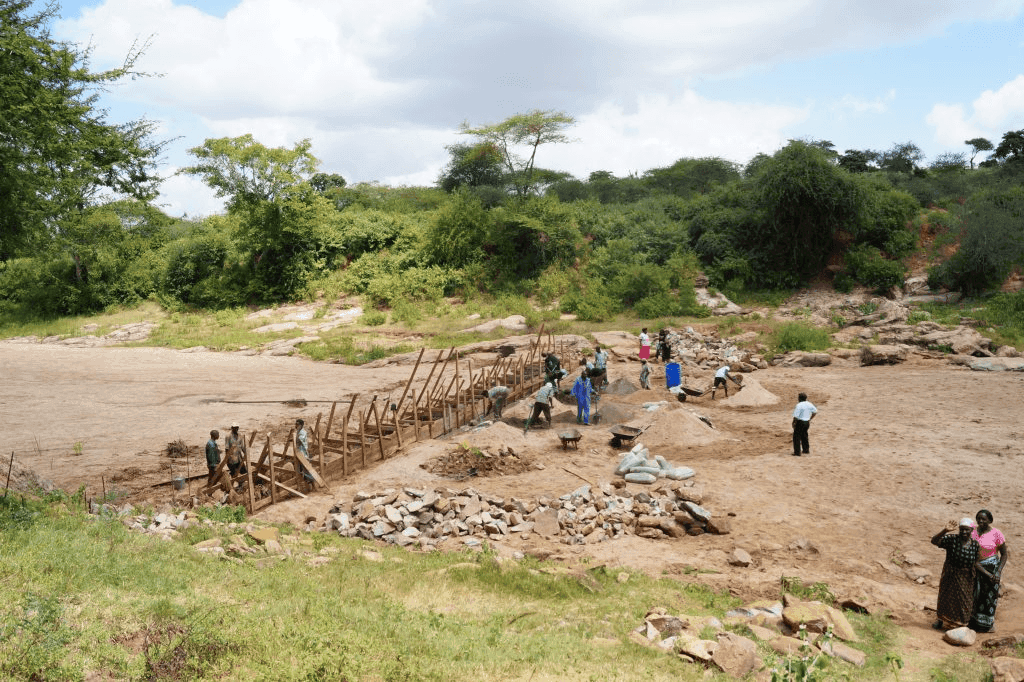
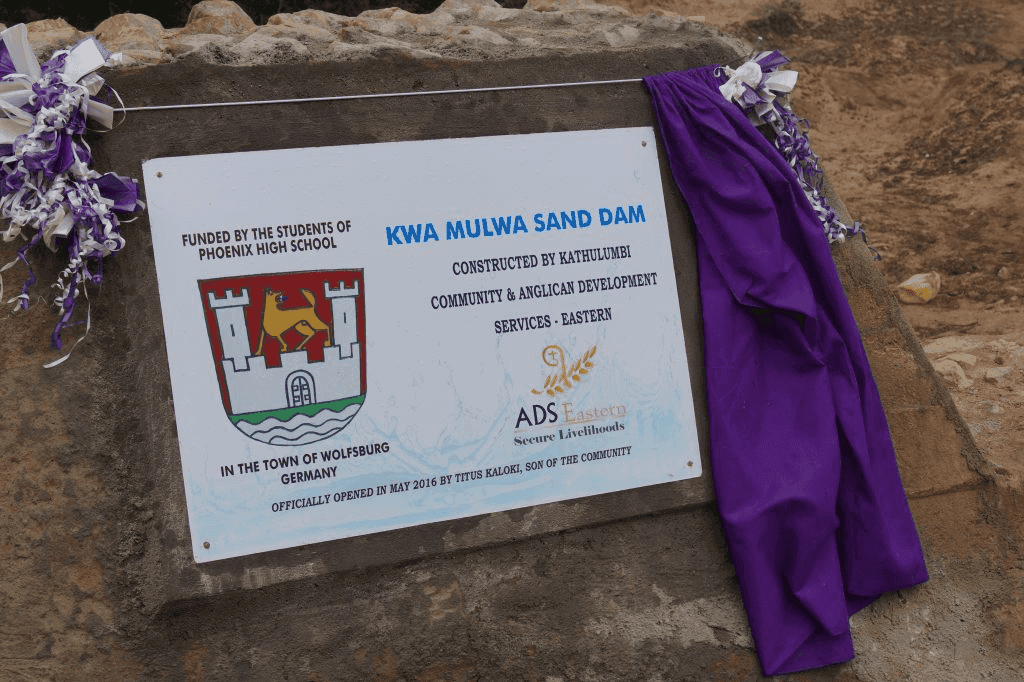
Communities come together. They provide sand, stones and labor. Aid organizations such as our partner, Anglican Development Services Eastern (ADSE), contribute cement, tools and know-how. After that, the sand dam remains a community project – from planning through to maintenance.
What changes as a result?
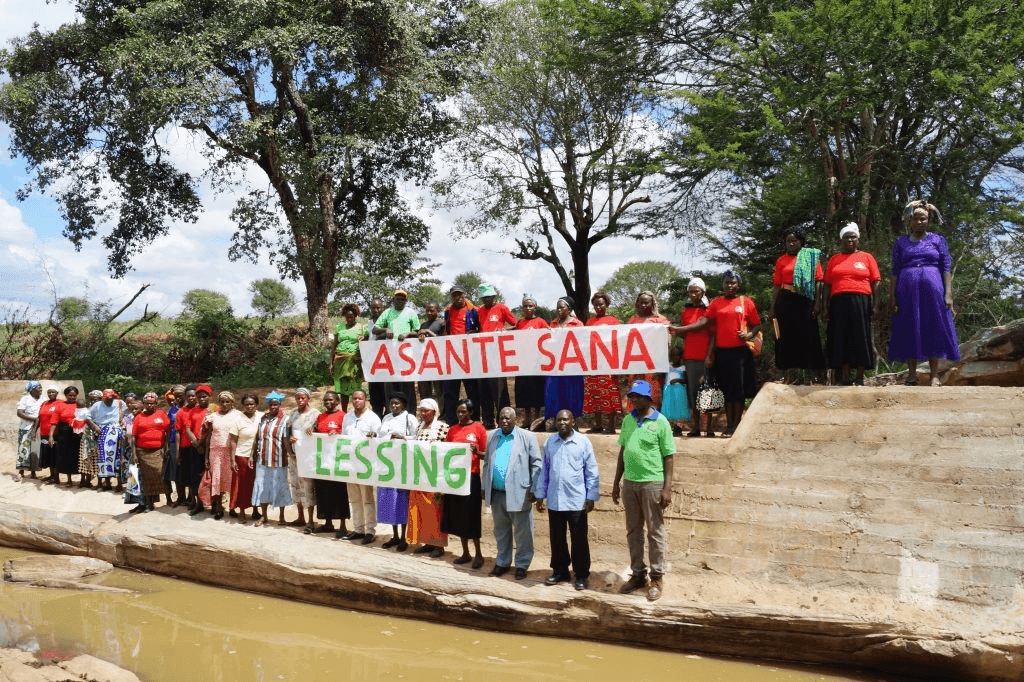
Before, many people had to walk long distances – often for hours – to fetch unsafe or salty water. With a sand dam, “fetching water” sometimes takes only ten minutes.
Children can continue attending school, parents can work, and the village can begin to flourish. Crops grow, trees sprout – the whole area breathes a sigh of relief.
In Kamutonye, a village in Makueni, people built their sand dam in two months. Once the dam had collected sand, there was enough water for everyday life – short distances, no constant thirst, no days spent hauling water. For very large, water-rich sand dams, the water is pumped out of the valley up to higher ground using a solar pump and used there for irrigated farming. This means food can be grown in the fields even during dry, water-scarce periods.