
Wood-Saving Stoves
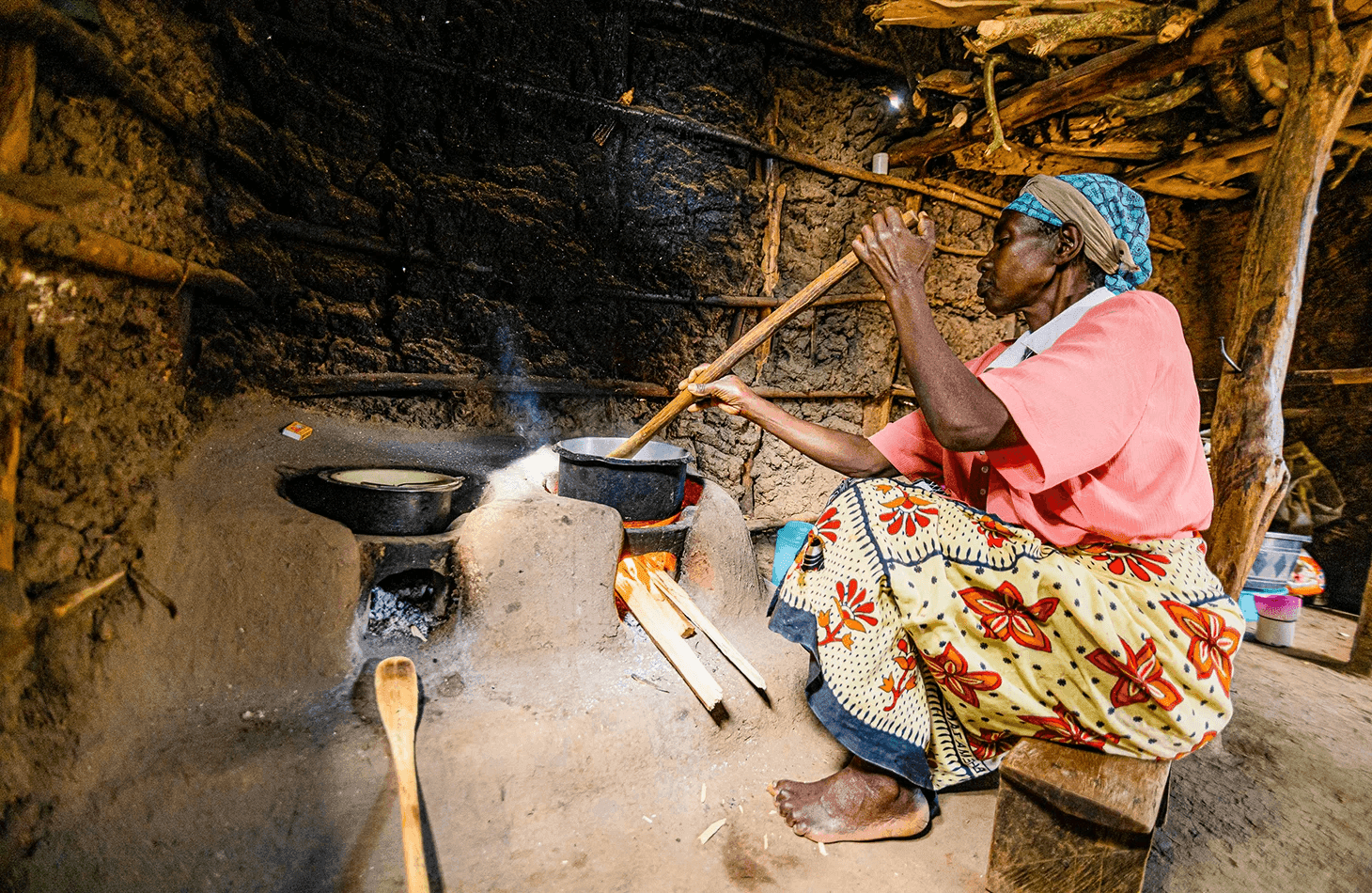
In many schools in Kenya, lunch is cooked over open fires. This requires enormous amounts of wood, fills the kitchens with thick smoke, and makes the work exhausting and unhealthy for the cooks.
The solution is wood-saving school stoves – large, permanently built cooking stations made of brick and metal that retain heat inside. They use up to two-thirds less firewood than an open fire. That means fewer trees have to be felled, less CO₂ is released into the air, and the cooks work in cleaner air with less smoke.
These stoves can hold huge pots in which school meals are cooked for hundreds of children at once. And because they use heat more efficiently, cooking is faster – leaving more time for other work.
Another benefit: collecting less wood means less hard labor for families and more time for lessons and leisure. The amount of wood saved can amount to several tons per year – a win for the forest, the climate and the community.
Here too, German schools often help with donations to cover materials and construction costs. The stoves are usually built together with local craftspeople, who pass on their knowledge to the village community.
Wood-saving stoves are an example of how a simple technical idea can solve several problems at once – from environmental protection to health.