
Rooftop Rainwater Harvesting
When the baobab tree sheds its leaves, it signals the start of the dry season. From May until the end of October, the sky often remains cloudless, and most water sources dry up.
In Makueni, this means the average distance to water doubles from 8 to 16 kilometers – that is 16 kilometers there and 16 back. Traditionally, women are responsible for fetching water. They transport it in plastic jerry cans carried by donkeys. The outward trip with empty cans takes about four hours, waiting and filling around two hours, and the return trip with the heavy load five to six hours. Because these journeys are barely manageable on top of their other work, girls between the ages of twelve and sixteen are often taken out of school to fetch water.
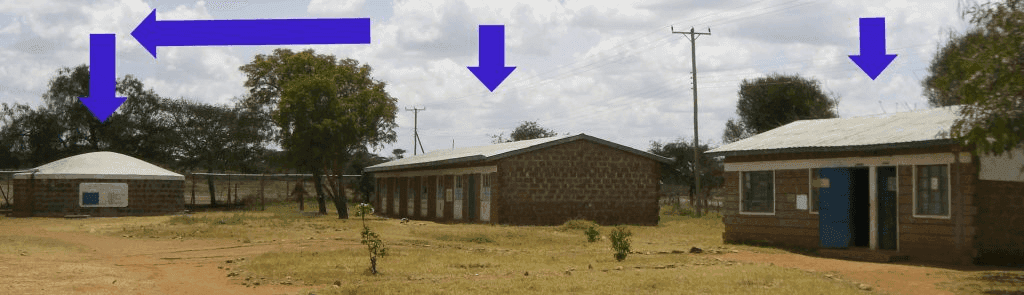
The solution is simple and effective: during the short but often heavy rainy season, the water must be collected and stored for the dry season. Large water tanks next to the schools are ideal for this – their wide-spanning roofs are perfect for collecting rain in gutters and channeling it into tanks.
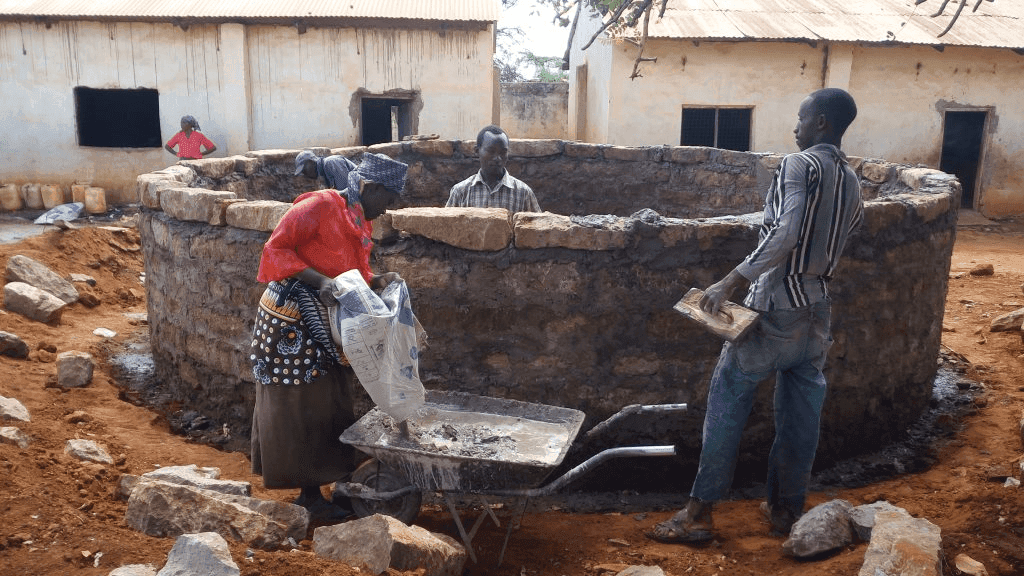
Where people receive “help toward self-reliance” – building materials, tools and technical guidance – they build these roof rainwater harvesting systems themselves, often led by women. Construction takes several weeks.
Our Kenyan partner organization Anglican Development Services Eastern (ADS Eastern), the development organization of the Anglican Church in Kenya, oversees the projects. But materials, the long transport over unpaved tracks and guidance from skilled workers cost around 10,000 euros per rooftop catchment system (90 meters of guttering, 50 m³ tank). For a village community of poor smallholder farmers, that is unaffordable.
That is why German schools help – for example through sponsored runs or charity events. On the completed tanks, the name and logo of the supporting school are prominently displayed. Some schools in Germany have already made possible several of these “school-owned” water projects in Kenya.
Thanks to these tanks, girls no longer have to spend days fetching water – and can attend school regularly again.